Starlink & Starlink Mini Briefing · June 2026
Starlink Just Passed 10 Million Users — Here's What It Means for Your Mini Power Setup
SpaceX is launching satellites at a record pace, rolling out direct-to-phone service, and prepping its terabit Gen 3 fleet. Underneath the headlines is a quieter shift that matters if you take your connection off-grid: the Starlink Mini is becoming the terminal of choice — and a Mini is only as good as the battery keeping it alive.
The satellite internet story stopped being niche a while ago. In the span of a few months Starlink has gone from a rural-broadband curiosity to genuine global infrastructure — and the most portable hardware in its lineup, the Starlink Mini, is riding that wave straight into RVs, sailboats, backcountry trips, and emergency kits. Here's a plain-English rundown of the biggest developments this week, and a practical look at how each one feeds demand for portable power solutions like Ravion® and PeakDo LinkPower.
Ravion® · Built only for Starlink Mini
Run your Mini up to 9 hours, no outlet.
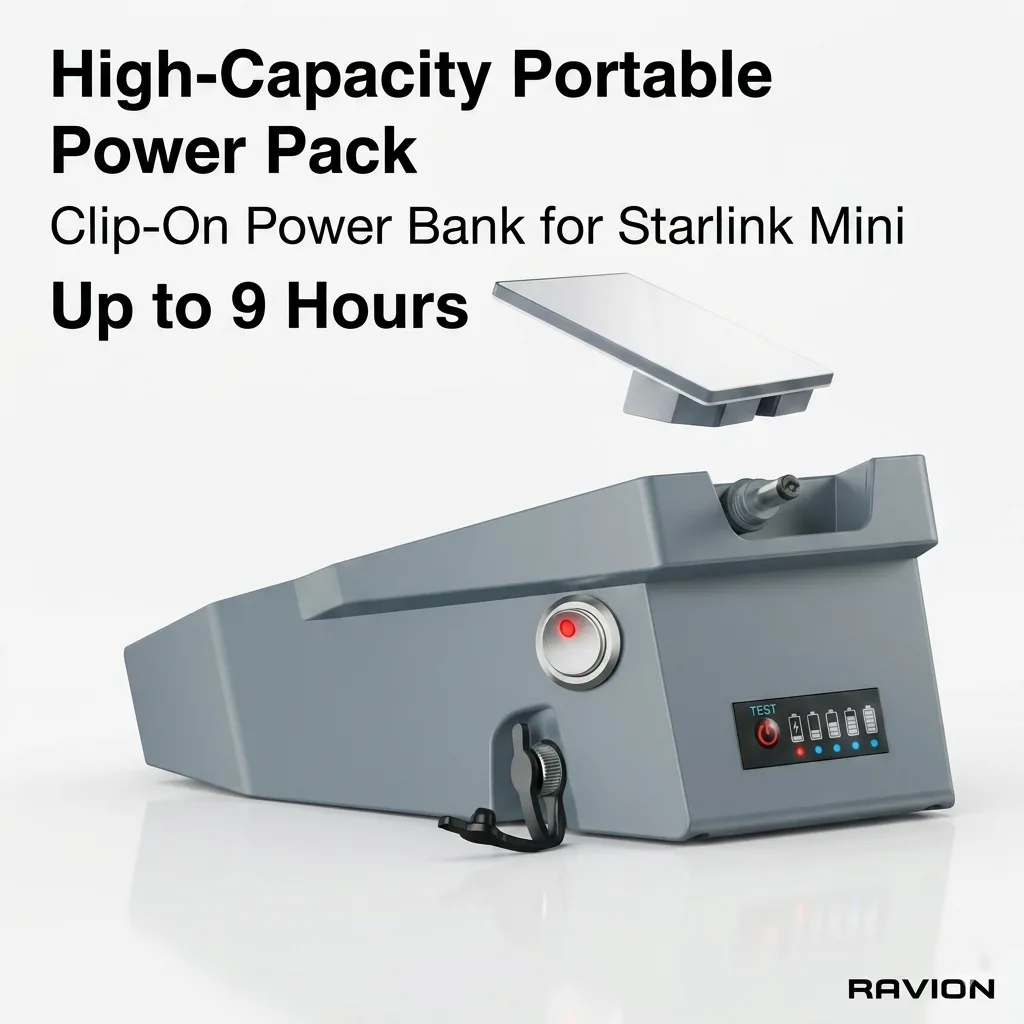
Ravion® Battery
158Wh · up to 9 h runtime · IP65 · 2.6 lbs · Under FAA 160Wh limit
$328 Shop now →
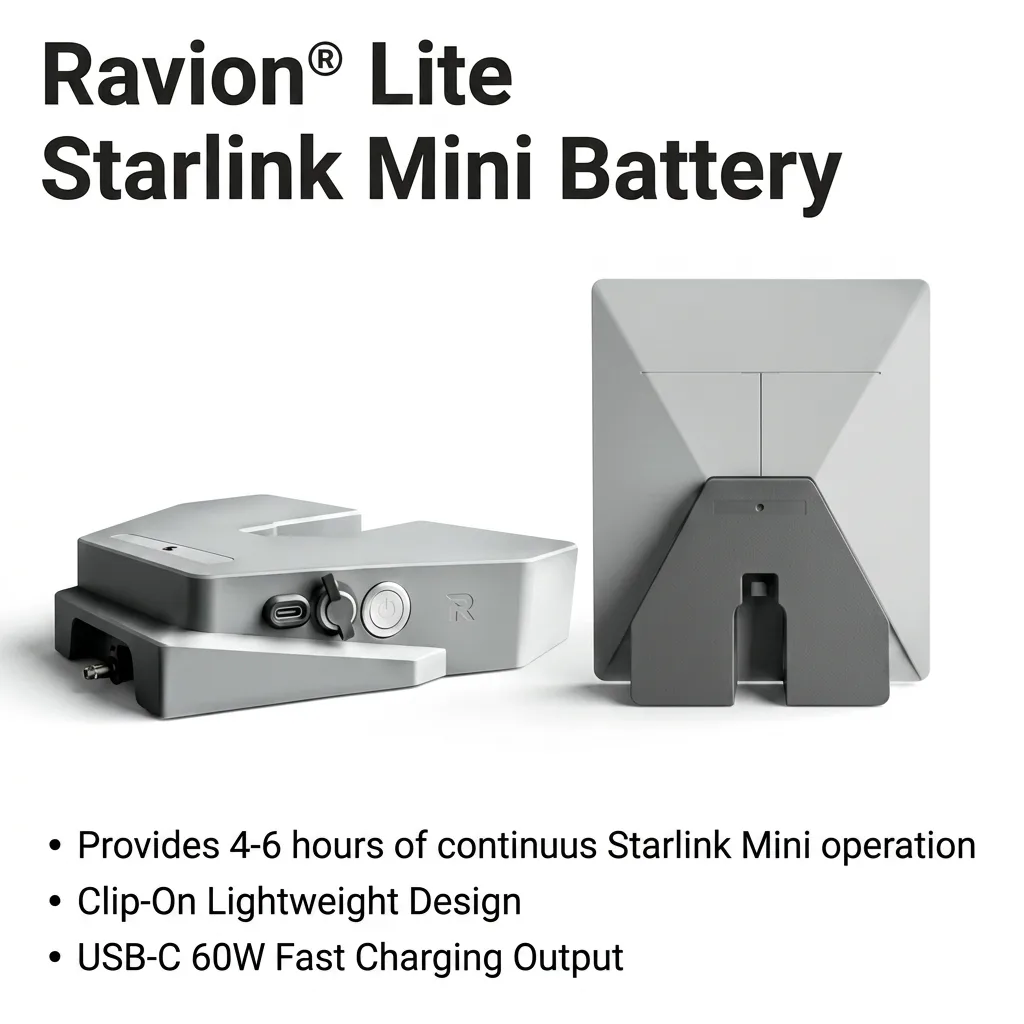
Ravion® Battery Lite
99Wh · up to 6 h runtime · 1.9 lbs · USB-C 60W out
$189 Shop now →
Free U.S. shipping · 30-day returns · 12-month warranty · Ships from California in 1 business day · See all power kits

01The constellation keeps growing — fast
SpaceX added another batch of Starlink satellites to orbit this week, continuing a launch cadence that has produced roughly 50 dedicated Starlink missions so far in 2026. The payoff shows up in the numbers: Starlink crossed 10 million subscribers in February 2026 across more than 100 countries, with well over 10,000 active satellites overhead — by far the largest low-Earth-orbit constellation ever built.
Why should a power-accessory shopper care about satellite counts? Because density equals performance. More satellites in view means lower latency, fewer dropouts, and a more usable connection in exactly the remote places where the Mini gets deployed. A network that performs reliably off-grid is a network people are willing to carry off-grid — and that's the entire premise behind buying a portable terminal in the first place.
02Direct-to-Cell is making Starlink a household name
Starlink's Direct-to-Cell (D2C) service — satellite texting and limited data straight to an ordinary, unmodified smartphone — has become one of the company's headline products. SpaceX has deployed hundreds of D2C-capable satellites and is partnering with carriers such as T-Mobile in the U.S., with coverage expanding into markets like Canada, Japan, and New Zealand.
D2C doesn't use a Starlink Mini, so it isn't a direct power-accessory play. But it's doing something valuable for the whole ecosystem: putting the word "Starlink" in front of millions of mainstream mobile users for the first time. That brand familiarity is the top of a funnel that eventually leads people to dedicated hardware when texting-from-a-mountaintop isn't enough — and when they go looking for a real terminal, the Mini is the obvious entry point.
03Gen 3 satellites are coming — and they're a step change
SpaceX is targeting 2026 to begin launching its third-generation (V3) satellites aboard Starship. Each one is designed to deliver more than a terabit per second of downlink and over 200 Gbps of uplink — roughly 10× the downlink and 24× the uplink capacity of the current generation. A single Starship load of Gen 3 birds could add around 60 Tbps to the network, more than twenty times what a typical launch adds today.
Translated for the field user: more headroom, higher speeds, and less congestion in busy corridors. The better the network gets, the more attractive a Mini becomes for serious mobile use — and the more it makes sense to invest in power that can actually keep it running all day.
04The UK reportedly adopts Starshield
In early June, multiple outlets reported that the United Kingdom's Ministry of Defence has begun shifting operational communications onto Starshield, the hardened, government-grade version of Starlink — one of the first major military deployments outside the United States. The MoD hasn't confirmed the specifics, but the story underscores how central the constellation has become to mission-critical connectivity worldwide.
It's a defense headline, not a consumer one, yet it reinforces the same theme: Starlink is now treated as essential infrastructure. Reliability at that level is exactly what off-grid buyers want to hear before they commit to building a portable kit around the Mini.
05The Starlink Mini is winning the portability race
At about 2.4 lbs with an integrated Wi-Fi router, the Mini remains the most portable Starlink terminal — and adoption is accelerating among the people who need internet where outlets don't exist:
Who's buying the Mini right now
RV travelers and overlanders running mobile offices from the road. Sailboat and offshore boaters staying connected at sea. Emergency response teams standing up comms when the grid is down. And a growing wave of remote workers who'd rather work from a trailhead than a desk. The common thread isn't the dish — it's power. The Mini draws roughly 25–40 watts in normal use, which is trivially easy at home and surprisingly tricky in a tent, a van, or a life raft.
Starlink has been requiring current firmware on devices through 2026. If you're running an older Mini, open the Starlink app and update before your next trip — it improves stability and roaming performance, and saves you from troubleshooting in the field. A fully charged battery and current firmware are the two cheapest insurance policies in mobile connectivity.
06Where Satellite Link Power comes in
Every trend above expands the same market: portable, reliable power for the Starlink Mini. A terminal that can't stay charged is just expensive luggage. That's the gap our clip-on and snap-on batteries close — no dangling cables, no hunting for a 12V outlet, no inverter math. Three options cover the vast majority of real-world use cases.

Ravion® Battery
158 Wh · up to 9 hrs · 2.6 lbs · IP65
- Longest runtime in the lineup for all-day off-grid use
- Clips directly onto the Mini — no tools, no cables
- Pass-through charging keeps you online while it refills
- IP65 rated for rain, dust, and rough conditions
Ravion® Battery Lite
99 Wh · 4–6 hrs · 1.9 lbs · IP65
- Under 100 Wh — carry-on friendly for flights
- USB-C 60W fast charging for phones & laptops too
- Same secure clip-on design, lighter to pack
- Built-in heat, overcharge & surge protection
PeakDo LinkPower 1
99 Wh (27,500mAh) · 4+ hrs · 1.42 lbs
- Custom snap-on fit, under 100 Wh for air travel
- Bidirectional USB-C (up to 100W in / 65W out)
- LCD readout + app monitoring for live status
- Three 1/4" screw holes for tripod & mast mounting
Side-by-side comparison
| Model | Capacity | Runtime* | Weight | Air travel | Best for |
|---|---|---|---|---|---|
| Ravion® Battery | 158 Wh | Up to 9 hrs | 2.6 lbs | Carry-on w/ airline approval | RV, base camp, long days |
| Ravion® Battery Lite | 99 Wh | 4–6 hrs | 1.9 lbs | Carry-on, no approval needed | Air travel, light packing |
| PeakDo LinkPower 1 | 99 Wh | 4+ hrs | 1.42 lbs | Carry-on, no approval needed | Tripod/mast setups, data nerds |
*Runtime is manufacturer-rated and varies with usage, signal, and temperature. The Mini's draw climbs under heavy load and in cold weather, so plan conservatively.
Match the battery to the trip
Flying somewhere remote? Lithium batteries under 100 Wh ride in your carry-on without special approval, which is why the Ravion Lite and PeakDo LinkPower are the natural choices for air travel. The 158 Wh Ravion is still carry-on eligible, but most airlines want approval for anything between 100–160 Wh — never pack any of them in checked luggage.
Living in the RV or van? Runtime is king. The full-size Ravion Battery gets you closest to a full working day, and pass-through charging means you can top it off from a solar setup or 12V system without ever taking the Mini offline. Pair it with one of our mounting systems for a permanent, rattle-free install.
On the water or shooting content? The PeakDo LinkPower's 1/4" mounting points and live LCD/app readout make it the favorite for tripod and mast deployments where you want eyes on your remaining runtime. Its bidirectional USB-C also turns it into a backup power bank for the rest of your kit.
Building an emergency kit? Buy two batteries, not one. Redundancy is the whole point of an emergency setup, and a charged spare turns "we lost comms" into "we swapped the pack." Browse the full range on the Satellite Link Power store.
07Frequently asked questions
How long will a battery run my Starlink Mini?
It depends on capacity and how hard you're using the connection. The Mini averages roughly 25–40 watts, so a 99 Wh pack typically delivers around 4–6 hours and the 158 Wh Ravion stretches toward 9 hours under lighter loads. Heavy streaming, lots of connected devices, and cold weather all shorten those figures, so size up if you need guaranteed all-day uptime.
Which batteries can I fly with?
Airlines follow the lithium-battery watt-hour rules: anything under 100 Wh goes in your carry-on with no special approval, which covers the Ravion Battery Lite (99 Wh) and PeakDo LinkPower (99 Wh). The 158 Wh Ravion Battery falls in the 100–160 Wh band, so most carriers want prior approval and limit you to spares. Never check any lithium battery — they fly in the cabin only. Always confirm with your specific airline before you travel.
Are these batteries waterproof enough for marine and RV use?
The Ravion batteries are rated IP65, meaning they shrug off dust and water jets — fine for rain, spray, and dusty trails. As with any electronics, full submersion is a different story, so keep them out of standing water and they'll hold up well to real outdoor conditions.
Can I use the Mini while the battery is charging?
Yes — the Ravion batteries support pass-through charging, so you can recharge the pack from solar, a 12V system, or wall power while it simultaneously runs the Mini. That's what keeps you online during the handoff instead of dropping the connection every time you plug in.
Do I really need to update my Starlink Mini firmware?
It's worth doing. Starlink has required current firmware on devices through 2026, and updates improve stability and roaming behavior — exactly what matters when you're moving between locations. Open the Starlink app, check for updates, and run them on Wi-Fi before you head out of range. See Starlink's own power and setup guidance for details.
Ravion or PeakDo — which should I pick?
Choose Ravion if you want the simplest clip-on experience and the longest runtime (go full-size for RV/base-camp days, Lite for flying). Choose the PeakDo LinkPower if you value the LCD/app monitoring, bidirectional USB-C, and the 1/4" mounting points for tripod or mast setups. All three keep a Mini running off-grid; it comes down to runtime, weight, and how you like to mount and monitor your power.
Keep your Mini online — anywhere
Starlink's network is only getting bigger and better. Make sure your power keeps up. Explore clip-on Ravion® and PeakDo LinkPower batteries built specifically for the Starlink Mini.
Shop Starlink Mini Power →Sources & further reading
- Starlink Mini specification sheet (official)
- Supported power sources for Starlink Mini (Starlink Help Center)
- Starlink targets 2026 for terabit Gen 3 satellites (DCD)
- UK adopts SpaceX's Starshield for military operations (Reuters)
Subscriber, satellite, and capacity figures reflect publicly reported data as of June 2026 and change frequently. Battery specifications are manufacturer-rated; confirm current details on each product page before purchase.