Why Our Ravion® + Starlink Mini Setup Is Turning Heads in 2026
We did a double take too. One of our recent Ravion® Battery ads — a Starlink Mini running clip-on, off-grid, with a skyline behind it — caught attention from a verified account with over 10 million followers. Here's what that moment says about where connectivity is headed.
A simple product clip resonated far beyond the usual off-grid crowd.
Public engagement on the Ravion® "Starlink Mini" ad. A like isn't an endorsement — but reach like this, from large verified accounts in the outdoor and overlanding world, tells you how quickly portable satellite internet is going mainstream.
When a product clip starts pulling thousands of likes and shares — and the engagement spills over from your core audience into much bigger accounts — it's usually a sign the idea has hit a nerve. That's exactly what's been happening with portable Starlink Mini content this year.
Ravion® · Built only for Starlink Mini
Run your Mini up to 9 hours, no outlet.
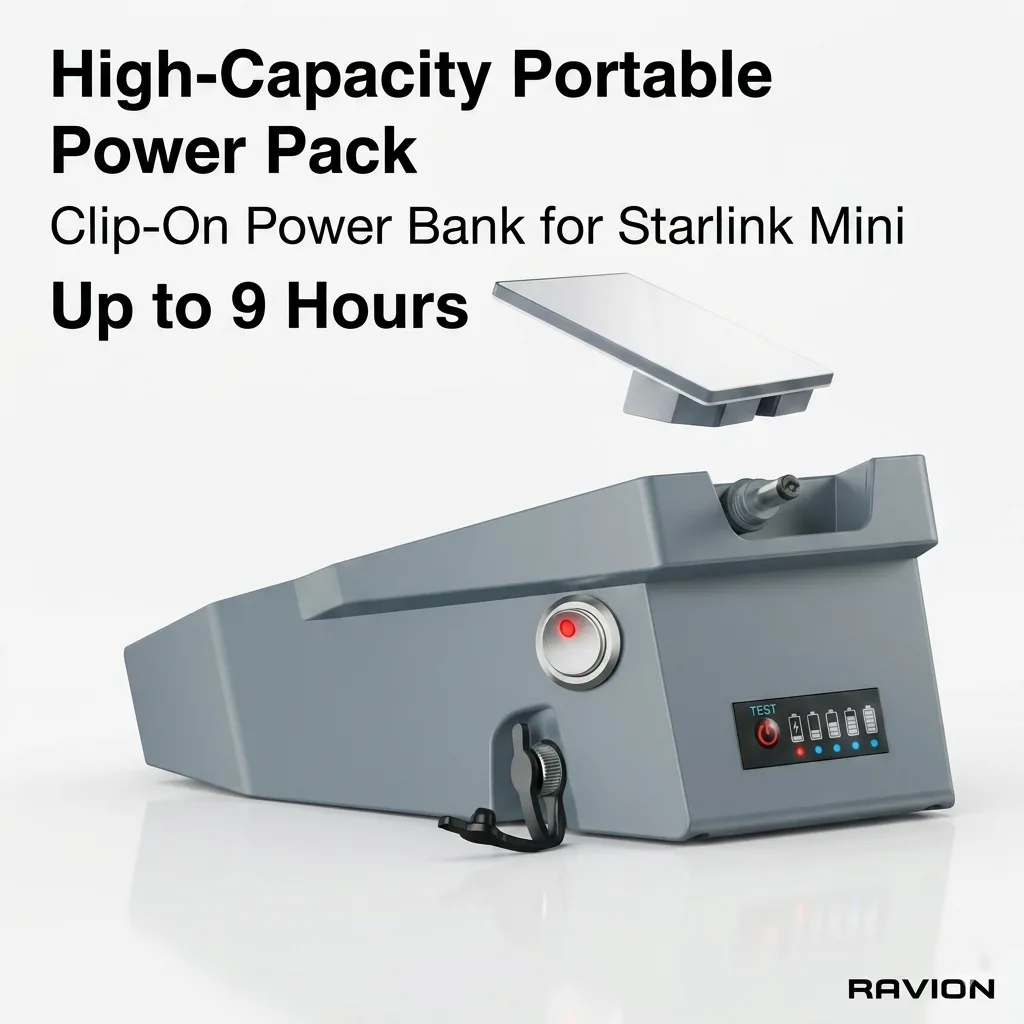
Ravion® Battery
158Wh · up to 9 h runtime · IP65 · 2.6 lbs · Under FAA 160Wh limit
$328 Shop now →
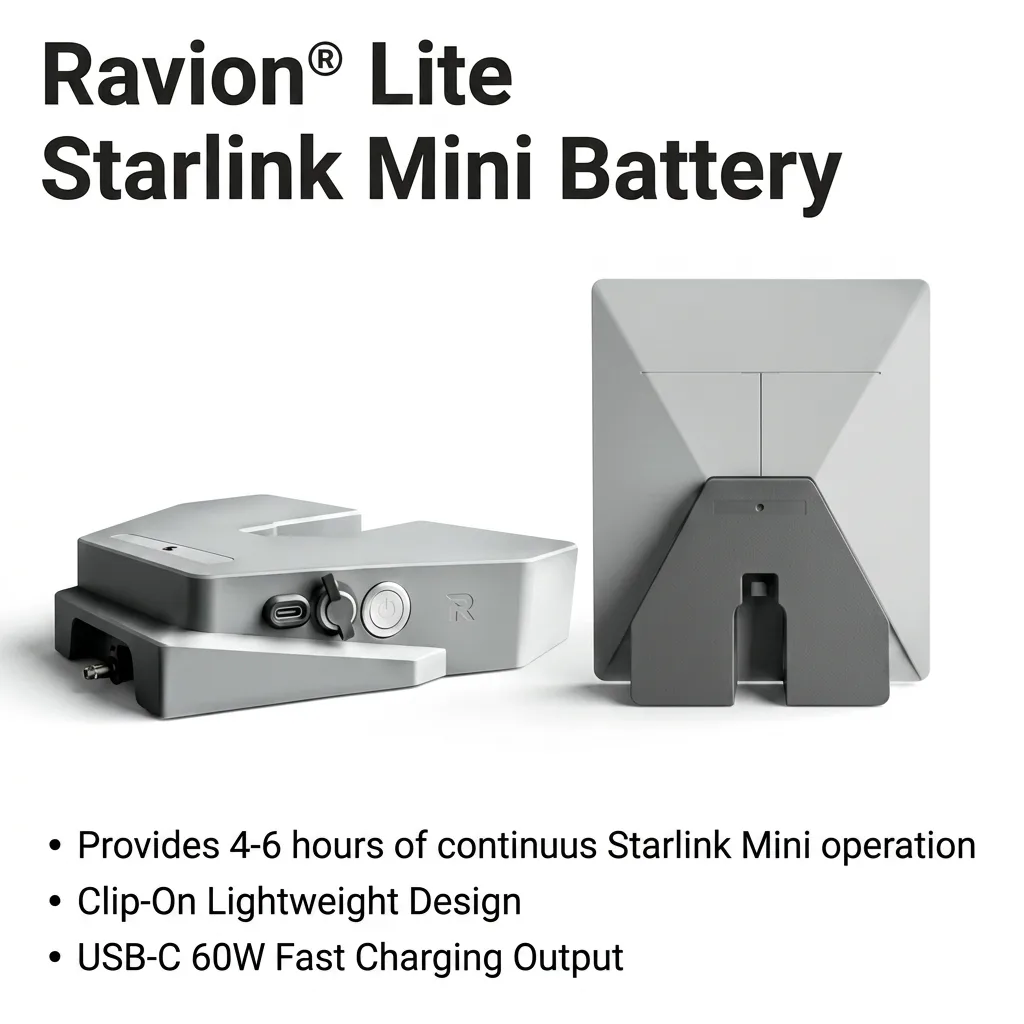
Ravion® Battery Lite
99Wh · up to 6 h runtime · 1.9 lbs · USB-C 60W out
$189 Shop now →
Free U.S. shipping · 30-day returns · 12-month warranty · Ships from California in 1 business day · See all power kits
The setup people keep stopping to look at is deceptively simple: a Starlink Mini powered by a compact, clip-on battery instead of a heavy power station, deployed in seconds from a vehicle. It captures something a lot of people want right now — full internet, no infrastructure, nothing bulky to carry.
The demand for "internet anywhere" is exploding
Reliable connectivity off the grid used to be a niche concern. In 2026 it's mainstream, and the audience spans groups that don't usually overlap:
- RV travelers and van-lifers who want real broadband at remote campsites.
- Overlanders and outdoor enthusiasts heading well past the last cell tower.
- Emergency-preparedness advocates building communication that outlasts the grid.
- Remote workers and digital nomads taking the office somewhere with a better view.
- First responders and field teams who need a connection up in minutes.
What unites them is a refusal to trade adventure for being reachable. The Starlink Mini makes that possible — and the social response shows just how many people were waiting for it.
The challenge nobody talks about: power
Here's the catch the viral clips quietly solve. The Starlink Mini needs steady power — around 30 watts, continuously — and it has no large internal battery. Early adopters learned this the hard way, hauling bulky power stations or rigging improvised battery setups just to keep the dish alive for a few hours.
Those workarounds function, but they add weight, cost, and complexity to a setup whose whole appeal is portability. A dish you can hold in one hand doesn't feel so portable when it's chained to a 20-pound box.

That's exactly why we built the Ravion® Battery
We designed the Ravion® Battery specifically for Starlink Mini users — not as a generic power bank, but as a purpose-built solution. It clips directly onto the Mini and delivers up to ~9 hours of off-grid runtime with pass-through charging, so you can run the dish and recharge at the same time. It's IP65 weather-resistant, deploys in seconds, and replaces the bulky power equipment most people start with.
Lightweight, fast, clean to integrate, and reliable — from a mountain overlook to an emergency staging area. That's the difference between a Starlink Mini that's technically portable and one that's genuinely ready for the road.

The future of connectivity is mobile
The momentum behind these posts points to something bigger: connectivity is going mobile, fast. As satellite internet keeps improving, portable power becomes just as essential as the dish itself — because a connection you can't keep running isn't really a connection at all.
Whether you're chasing off-grid destinations, running a mobile business, or simply staying ready for the unexpected, dependable power is what turns a clever device into a setup you can trust. We're proud to be part of that journey — and we love seeing where you take it.
Have you taken your Starlink Mini somewhere incredible? Tag us and share your setup — the best off-grid rigs get featured.
Frequently asked questions
Why does a Starlink Mini need a dedicated battery?
The Starlink Mini draws roughly 30 watts continuously and has no large internal battery, so it needs an external power source. A purpose-built clip-on battery like the Ravion® keeps it running off-grid without the bulk and weight of a full power station.
How long does the Ravion® Battery last on a charge?
Up to about 9 hours of Starlink Mini runtime, depending on usage and conditions. Pass-through charging lets you power the dish and recharge the battery simultaneously, reducing downtime in the field.
Is the Ravion® Battery weatherproof?
Yes. It's rated IP65 for dust and water resistance, built for camping, RVing, boating, overlanding, and emergency use in demanding outdoor conditions.
Who is a portable Starlink Mini power setup best for?
RV travelers, van-lifers, overlanders, remote workers, digital nomads, first responders, and emergency-preparedness users — anyone who needs reliable internet beyond cell coverage and wants a lightweight, fast-to-deploy system.
Stay connected. Stay powered. Go anywhere.
Turn your Starlink Mini into an all-day, go-anywhere connection.
Engagement figures reference public metrics from the referenced Ravion® ad as of June 2026. Starlink® is a registered trademark of SpaceX; Satellite Link Power sells compatible power and mounting accessories and is not affiliated with SpaceX. Confirm current Starlink details at starlink.com.