Starlink Mini vs Phone Hotspot vs Cell Booster: Which RV Internet Setup Is Best?
Three ways to get online in an RV, three very different price tags. Here is an honest side-by-side of Starlink Mini, a phone hotspot and a cell booster, including where each one falls short.
We sell power and mounting gear for the Starlink Mini, not internet service, so we have no stake in which plan you pick. If you go the Starlink route, our new owner guide covers the gear you will need.
Starlink Mini vs hotspot comes down to where you camp. A phone hotspot is cheapest and uses almost no power, but only works where there is cell coverage. A cell booster stretches weak coverage but cannot create a signal from nothing. A Starlink Mini works with zero cell bars anywhere it can see open sky, at the cost of $199 hardware, $55–$175 a month and 25–40W of power.
- Mostly campgrounds near towns: a hotspot plan is enough.
- Fringe coverage: a booster can turn one bar into usable data.
- Boondocking and remote work: Starlink Mini, often with a hotspot as backup.
Every RV forum has the same thread: Starlink Mini vs hotspot, and is a cell booster worth it? The honest answer is that all three work, for different trips. Below are the real costs as of October 2026, what each option needs to work, and the setup we see most full-time RVers settle on.
Ravion® · Built only for Starlink Mini · New Mini owner? Start here
Run your Mini up to 9 hours, no outlet.
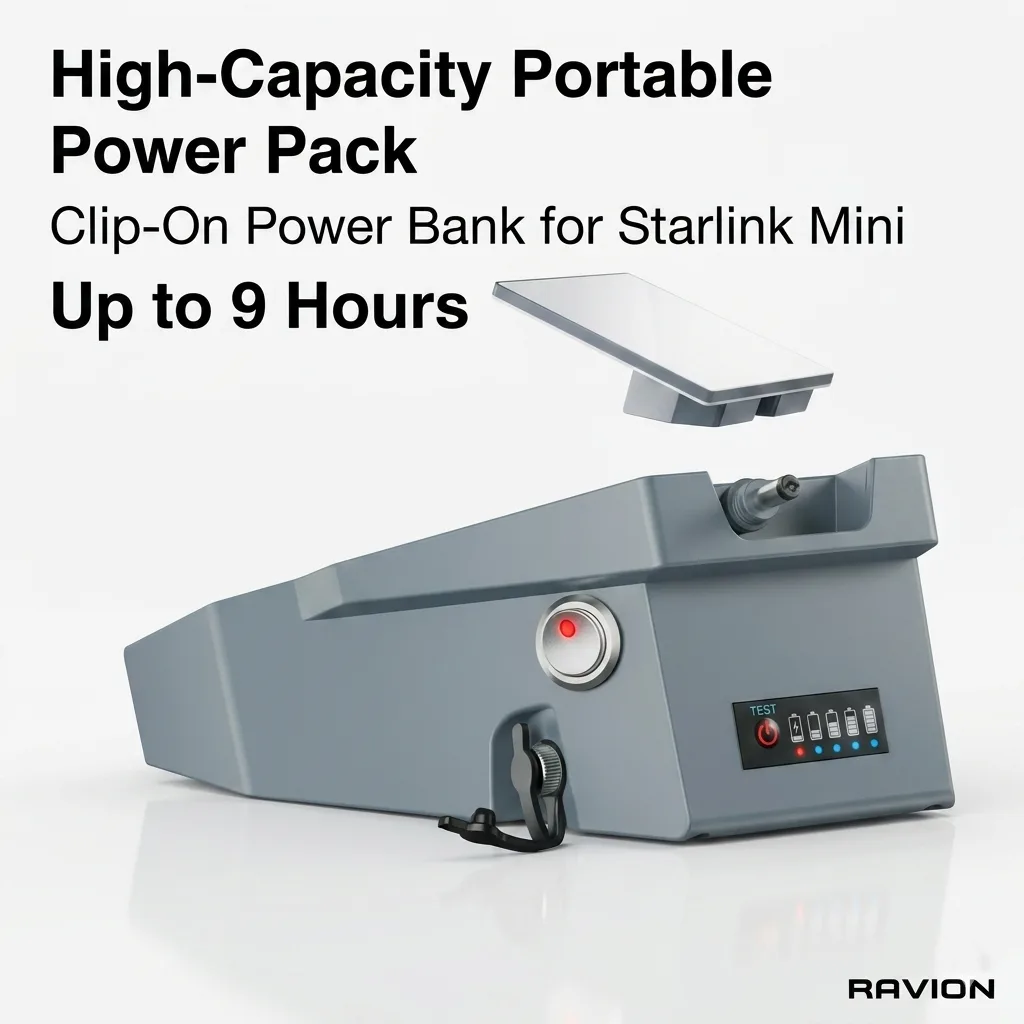
Ravion® Battery
158Wh · up to 9 h runtime · IP65 · 2.6 lbs · Carry-on w/ airline approval
$329 Shop now →
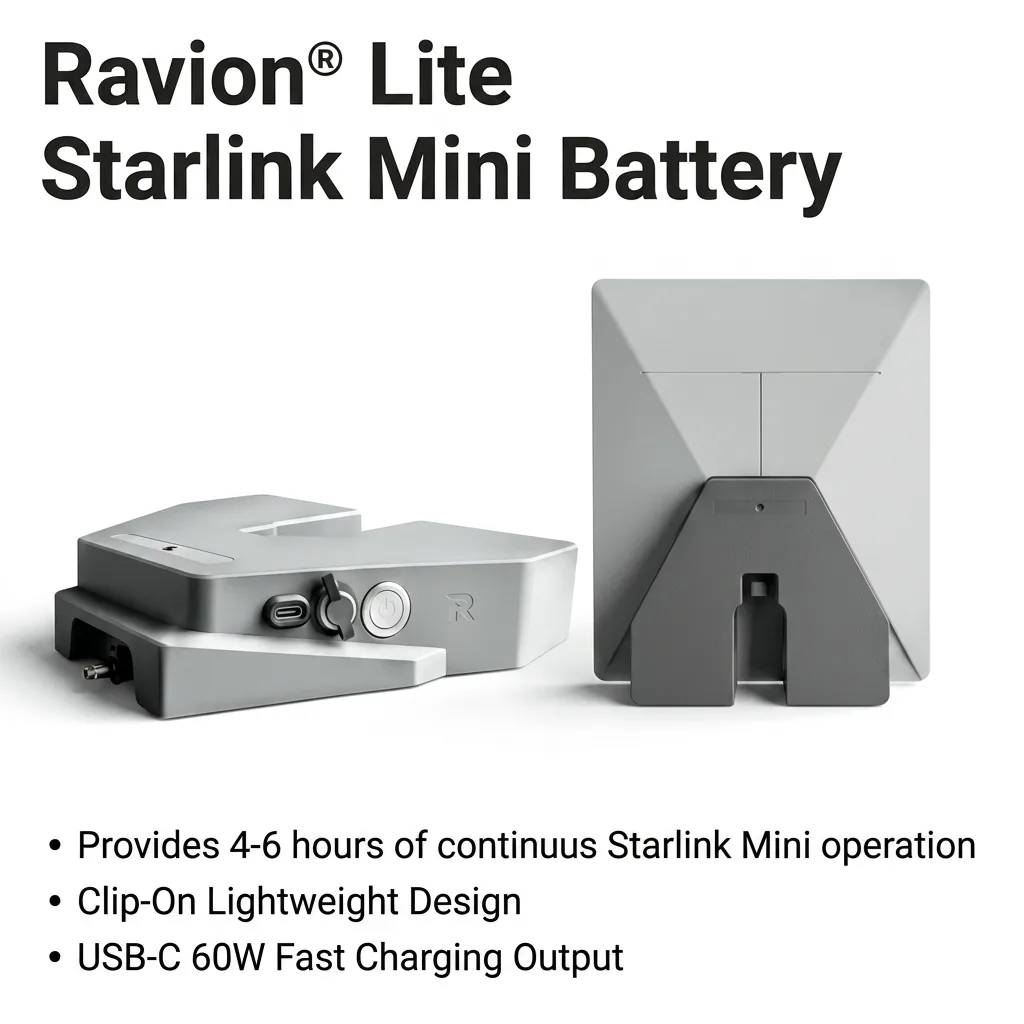
Ravion® Battery Lite
99Wh · up to 6 h runtime · 1.9 lbs · USB-C 60W out
$189 Shop now →
Free U.S. shipping on orders $100+ (West Coast) / $200+ (other states) · 30-day returns · 12-month warranty · Ships from California in 1 business day · See all power kits
Starlink Mini vs hotspot vs cell booster: side by side
| Phone hotspot | Cell booster | Starlink Mini | |
|---|---|---|---|
| Needs cell coverage | Yes, usable signal | Yes, at least a weak signal | No |
| Needs open sky | No | No | Yes, clear view of the sky |
| Hardware cost | Phone you already own | Around $500 for an RV kit | $199, or $16/month for 12 months |
| Monthly cost | About $45–$100 for a plan with hotspot data | Uses your existing phone plan | $55 (100GB), $80 (300GB), $175 (Unlimited) |
| Power draw | Almost none | Up to ~22W (1.8A at 12V) | 25–40W average |
| Under trees | Fine with signal | Fine with signal | Dropouts |
| Works in dead zones | No | No | Yes |
Sources: Starlink pricing from our Roam plans guide; hotspot plan prices from Android Authority's hotspot plan roundup; booster power from weBoost Drive Reach RV specs. Prices change often, so check before you buy.
When a phone hotspot is enough
If you mostly stay at campgrounds near towns and highways, start with your phone. It costs nothing extra to try, and the power draw is a rounding error.
The catch is the plan. Cheap hotspot plans often cap speed: Visible+ Pro offers unlimited hotspot data for about $45 a month, but hotspot speed is capped at 15 Mbps. Premium plans from the big carriers run about $85–$100 a month and include 200–250GB of full-speed hotspot data before slowing down. That is enough for streaming and video calls, as long as you have coverage.
Weekend campers, RVers who stay near towns, and anyone who mainly needs maps, email and some streaming.
When a cell booster helps
A cell booster uses an outside antenna to grab a weak signal and rebroadcast it inside your RV. RV kits like the weBoost Drive Reach RV advertise up to 50 dB of gain and draw up to about 1.8 amps at 12V. Expect to pay around $500 for an RV-grade kit.
Boosters are great at turning one flaky bar into a usable connection. What they cannot do is create a signal where there is none. If your phone shows "No Service" at your favorite boondocking spot, a booster will not fix it.
RVers who camp in fringe coverage: state parks, rural roads, the edge of a cell tower's range.
When you need Starlink Mini
Starlink Mini talks to satellites, not cell towers, so it works with zero cell bars anywhere it can see open sky. That is the deciding factor for boondockers, overlanders and anyone who has to make a work call from a canyon or a national forest.
The trade-offs are real, and we would rather you know them up front:
- It needs sky. Dense trees and canyon walls cause dropouts. Move the dish to a clearing.
- It costs more. $199 for the hardware plus $55–$175 a month for Roam.
- It uses more power. 25–40W on average, which is why a battery or vehicle power matters.
For full-day remote work numbers, read our test: can you work full-time on a Starlink Mini?

The combo most full-timers use
Ask long-time RVers what they run and you will hear the same answer: a phone hotspot as the everyday connection and Starlink Mini for everywhere else.
- Default to the hotspot when you have good coverage. It is cheap and uses no extra power.
- Switch on Starlink Mini when coverage drops or you are boondocking. Roam 100GB at $55 is plenty for part-time use.
- Add a booster only if you often camp at the edge of coverage and want to stay off Starlink data.
- Pause Starlink in months you stay put near town.
This setup gives you the cheapest connection most of the time and a reliable fallback in the places that matter.
Powering Starlink Mini in an RV
A hotspot runs off your phone. A Starlink Mini needs real power, and that is where most first-time setups go wrong. A phone charger under 100W will usually reboot the Mini during heavy use. You have three good options:
| Power source | How it works | Best for |
|---|---|---|
| RV house power | Plug the Mini’s power supply into an outlet or inverter | Parked with shore power or a large house battery |
| 12–24V DC adapter | Runs straight from the vehicle or RV 12V system | Driving days and RVs with a 12V system |
| Clip-on battery | Clips onto the Mini; runs it anywhere | Away from the rig: picnic tables, beaches, campsites |
At a steady 30W, a 99Wh Battery Lite runs the Mini about 2.8 hours and a 158Wh Ravion Battery about 4.5 hours. In lighter use the rated runtimes are 4–6 hours and 6–9 hours.


Starlink Mini vs hotspot FAQ
Is Starlink Mini better than a phone hotspot for an RV?
It depends on where you camp. Starlink Mini works anywhere with open sky, including places with no cell signal at all. A phone hotspot is cheaper and uses almost no power, but only works where there is cell coverage. Many full-time RVers use both.
Can a cell booster work with no signal?
No. A cell booster amplifies an existing weak signal. If there is no signal for it to pick up, there is nothing to boost. In dead zones you need satellite internet such as Starlink Mini.
How much does Starlink Mini cost per month for an RV?
Starlink Roam plans cost $55 a month for 100GB, $80 for 300GB and $175 for Unlimited, before taxes. The Mini hardware is $199, or $16 a month for 12 months.
How much power does Starlink Mini use compared with a cell booster?
Starlink Mini averages about 25–40W. A vehicle cell booster such as the weBoost Drive Reach RV draws up to about 1.8 amps at 12V, or roughly 22W at most. A phone hotspot uses almost nothing beyond charging the phone.
Does Starlink Mini work under trees?
Not well. Starlink needs a clear view of the sky, and trees or canyon walls cause dropouts. A hotspot or booster usually handles tree cover better, as long as there is cell coverage.
Get 15% off your first Starlink Mini power kit (up to $30)
Runtime tests, mount tips and new-gear alerts from our California workshop — one email a week, no spam. Your WELCOME15 code (15% off, up to $30) lands in your inbox right away.
Going Starlink? Power it properly.
Clip-on batteries, 12–24V vehicle charging and tool-free mounts built only for the Starlink Mini. Free U.S. shipping on orders $100+ (West Coast) / $200+ (other states) and 30-day returns.